
What if we've got executive presence all wrong?
By Raatha Ganesh, GM Singapore at Black Dog Consultants
TL;DR (for the time-starved):
We’ve glamourised the loudest voice, the biggest energy, the “command-the-room” aura.
How often does that charisma silence nuance?
How many great ideas go unheard because presence is mistaken for volume?
I once worked with a leader who barely spoke in meetings - but when she did, the entire room leaned in. She didn’t fill the room. She tuned into it. Her power was in what she noticed, not what she projected.
That’s when it hit me: real executive presence isn’t about performance. It’s about attunement.
It’s not a spotlight - it’s a mirror.
It’s not a solo - it’s a dance.
In today’s climate, attunement isn’t soft - it’s strategic.
What’s more powerful: being heard... or hearing what others miss?
We need to talk about presence.
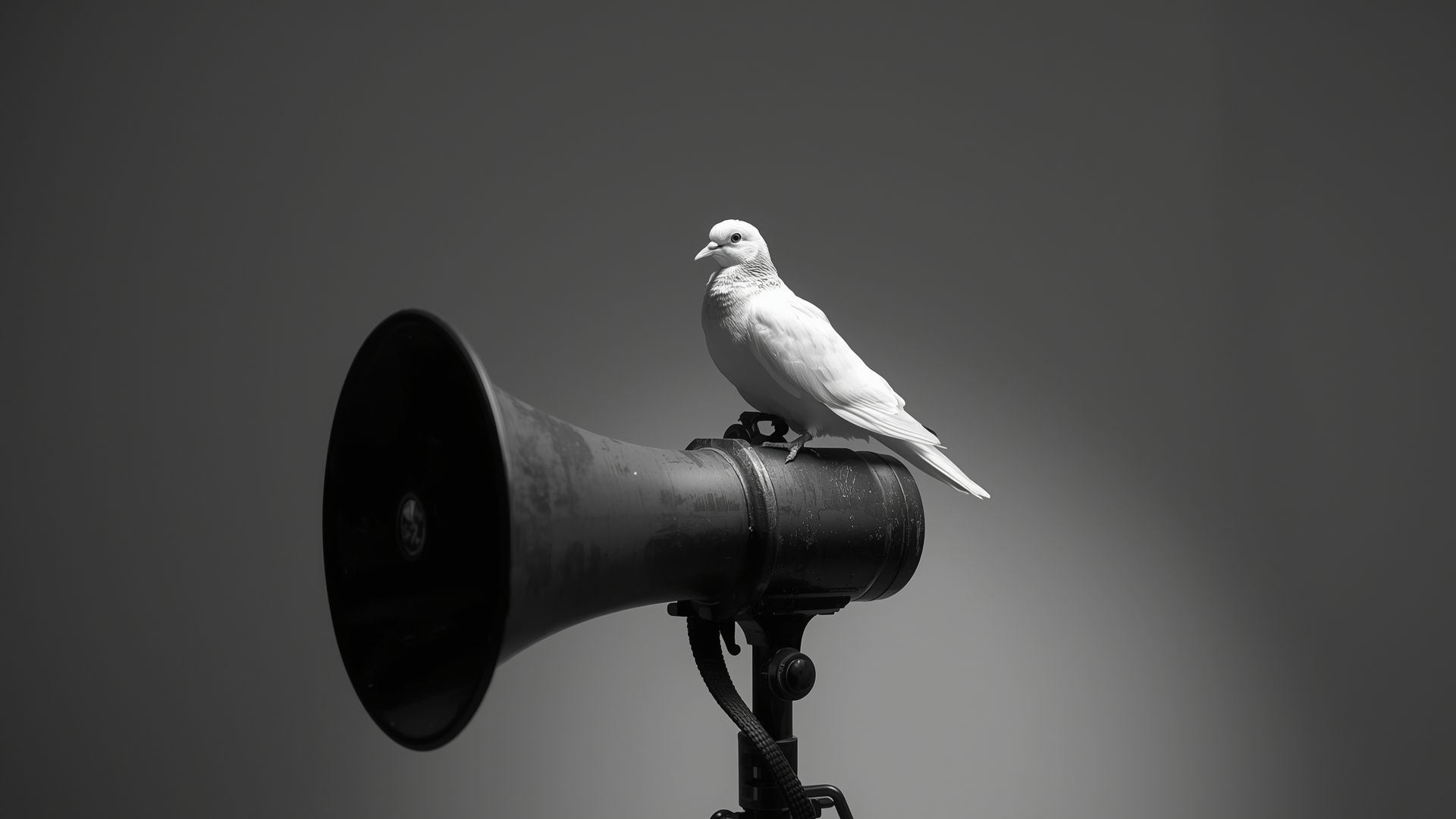
Not the kind that lights up a stage or owns the mic.
Not the one that turns heads in a boardroom.
I mean the kind that notices.
That listens before it speaks.
That can hold space - without needing to fill it.
Too often, we equate executive presence with extraversion:
Confidence. Charisma. Visibility.
But presence isn’t one thing.
It shape-shifts.
Sometimes it’s bold and booming.
Other times, it’s quiet and still.
Neither is better. Both are needed.
In our work, we’ve seen how reflective, relational leadership -
the kind that asks more than it answers -
can shift a room just as powerfully as the loudest voice.
And yet so many of us still carry a narrow script of what a “real leader” looks like.
A script shaped by old narratives.
One that prizes volume over nuance.
It’s time to rewrite it.
Presence isn’t performance. It’s perception.
Inspired by Susan Cain (Quiet) and Megumi Miki (Quietly Powerful), we’ve been sitting with this tension:
What if our narrow definition of “presence” is creating narrow leaders?
What if we’re rewarding volume over value?
Projection over perception?
Command over connection?
Both Cain and Miki offer a powerful counterpoint.
Miki shows us that quiet is not weak - it’s wise.
Cain reframes introversion as a hidden strength in a world obsessed with noise.
Their work echoes what we’ve seen again and again:
The most powerful person in the room isn’t always the one talking.
Sometimes, it’s the one everyone looks to - when the meeting turns messy.
The calm anchor.
The thoughtful pause.
The leader who doesn’t need to raise their voice to raise the room.
And let’s be honest.
You’ve felt it too, haven’t you?
It’s not always the loudest who lead.
It’s the ones who speak with intent - and leave a mark that lingers.
This isn’t about replacing extraversion. It’s about integrating.
Yin and yang. Assertive and attentive. Directive and reflective.
The best leaders don’t default to one mode. They discern the moment and shift accordingly.
That’s what presence is. It’s tuning in to what the moment requires before stepping forward.
Think of it like a spectrum, not a single gear. A well-calibrated leader knows how to shift tone, pace and energy in response to the environment. They don’t default to a fixed style. They adapt with clarity.
You can only do that when you know how to:
- Read the emotional field in the room
- Sense when to speak and when to hold
- Respond, not react
- Create space for others to rise
Because here’s what’s at stake: the leaders who create psychological safety, drive trust and inspire loyalty aren’t always the loudest; they’re the most attuned. And that translates directly to better team performance, retention and innovation.
This isn’t theory. It’s already happening.
Top leaders are rethinking presence - not as performance, but as attunement.
Even Harvard Business Review is naming it.
In their May 2025 article, “When the Best Leadership Skill Is Just Being Present,” Lisa Zigarmi and Stella Grizont call it out:
In a noisy world, being present isn’t soft. It’s strategic.
And the data agrees.
In DDI’s 2023 Global Leadership Forecast, Asian leaders ranked highest in empathy -
but lowest in confidence about their leadership brand.
Let that land for a moment.
The capability is there. The recognition isn’t.
So here’s the real question:
Stop asking, “How can I show up louder?”
Start asking, “How can I show up clearer?”
Because resonance beats performance. Every time.
Want to spot a leader of the future?
Don’t just look for the loudest voice in the room.
Look for the one who shifts the room by being fully attuned to it.
Because maybe, just maybe, the bravest thing a leader can do today is listen first.
This isn’t a call to conform to a particular leadership archetype. It’s not about glorifying stillness over strength. It’s a call to evolve towards a more integrated kind of leadership, where voice and silence, boldness and stillness, clarity and compassion co-exist.
What if your next C-Suite or leadership development initiative didn’t start with a louder voice, but a clearer sense of self?
Here’s the truth: the best leaders don’t just perform, they transform. They know who they are. They have a strong moral compass. They know what they stand for and they stand in it - so clearly, so confidently, that they unknowingly stand out.
That’s what a real voice is. It’s not just heard, it’s felt. And in doing so, they create a sense of belonging that invites others to fully step into themselves. This is an ego-shedding exercise. It takes courage, deep self-awareness and a willingness to get uncomfortable. But the leaders who do it unlock something rare: presence with impact.
The best leaders aren’t just confident, they’re calibrated - moment by moment, audience by audience.
Start here: In your next leadership team meeting, observe who speaks the most and who shifts the conversation when they do. Then ask: Are we rewarding the right kind of presence?
💡 Ready to put it into practice?
In our next issue, we share the exact behaviours, micro-practices and frameworks that help you build executive presence that actually shifts the room, not just fills it.
🔜 Stay tuned for Part 2: How to Build Executive Presence That Actually Shifts the Room
Because presence isn’t what you perform.
It’s how you show up - moment by moment, conversation by conversation.
